Skip to main content Skip to footer

How to become a nursing and midwifery practice educator

This guide explains the career pathway to becoming a nursing and midwifery practice educator in NHS Scotland.

Salary

We know you've worked hard to build your clinical knowledge and skills. When you take this next step, we'll make sure your salary clearly reflects your dedication and advanced skills. Read more about our pay and benefits.

Entry
Experienced

Entry

£52,845 

Practice educators start on a salary of £52,845 per year before tax.

Experienced

£70,303 

As an experienced nursing and midwifery practice educator, your salary can reach £61,466 per year. If you step into a lead practice educator role, your pay could increase to £70,303 before tax.

What is a nursing and midwifery practice educator?

Practice educators are experienced and registered nurses or midwives. They come from all areas of nursing and midwifery practice and have significant experience in clinical practice and education. 

You'll be employed by Public Services Delivery Scotland (PSD Scotland) but hosted within a regional health board. Working within a practice and development team, you’ll support the professional learning and development of nurses, midwives, and healthcare support workers within your host health board.

As a practice educator, you'll: 

  • support staff with their continuing professional development
  • create equitable and inclusive learning environments
  • act as the first point of contact for education advice 

Your responsibilities cover many areas of workforce education: 

  • Resource development—Create new national and local learning materials. You'll help staff build skills in clinical supervision and facilitation.
  • Coaching—Help local health boards use PSD Scotland resources effectively. You'll use coaching methods to embed these tools into daily practice.
  • Quality assurance—Check that all educational resources meet national quality frameworks. You'll make certain that training is safe and effective.
  • Collaboration—Work in partnership across different organisations and health boards. You'll support a multi-professional approach to healthcare education.

Education and training pathway

To become a practice educator, you need to be a registered nurse or midwife with clinical experience and a strong track record of supporting and delivering learning in practice. 

You can develop towards this role by building your skills over time, progressing through the levels in the NMAHP Development Framework. For example, you might step up after gaining experience as a practice education facilitator. Building your skills includes: 

  • supporting learners 
  • delivering education 
  • helping to improve practice in the workplace 

While some roles may include postgraduate study in education, this is not always essential. Many practice educators develop through experience and ongoing continuous professional development, using resources on Turas Learn.

Get relevant experience and insight

You'll need significant clinical and management experience before applying for a practice educator role. You can build a strong application by taking practical steps in your current job. Try to gain insight through:

  • Supporting others to learn—Helping students and staff to develop their skills by acting as a mentor or supervisor, giving guidance, feedback, and support. 
  • Teaching and sharing knowledge—Delivering training sessions, creating learning materials, and helping introduce new training or programmes in your workplace. 
  • Driving change and improving services—Taking part in or leading projects that make care, training, or the working environment better. 
  • Working with others and leading—Working as part of a team to support staff development, share ideas, and encourage a positive learning culture. 
  • Continuing to learn yourself (CPD)—Keeping your own skills up to date by completing learning on Turas Learn, attending training sessions, and, if appropriate, studying for a postgraduate qualification in education.
  • Networking—Connect with existing practice education teams to share ideas and learn how they build a positive learning culture.

How long does it take to become a practice educator?

It usually takes 3–4 years to complete a nursing or midwifery degree, You'll then need to gain experience as a registered practitioner, including:

  • working as a qualified nurse or midwife
  • developing teaching and training experience
  • building skills at a senior practitioner level

The exact time varies depending on your career path. Most nurses or midwives become practice educators after a number of years gaining clinical and teaching experience.

Get to know the role

As a practice educator, you'll bridge the gap between national education strategies and clinical practice. You'll use your expertise to bring high-quality learning resources closer to the nursing and midwifery workforce.

As a nursing and midwifery practice educator, your role is to support staff learning and help improve the quality of care. Your work may include:

  • Creating learning resources such as guides, tools, and training materials to help staff and teams develop their skills.
  • Supporting learning in practice by using coaching approaches to help staff apply their knowledge in real clinical settings.
  • Sharing information about new training, learning resources, and career development opportunities to support staff growth.
  • Making sure training and education meet national quality standards.
  • Promoting equality and diversity by helping to make learning fair and accessible for everyone.
  • Acting as a point of contact for advice and guidance on education, training, and professional development.
  • Connecting with existing practice education teams to share ideas and learn how they build a positive learning culture.

To succeed in practice education, you'll need to develop high-level skills, known as meta-skills. These core abilities will help you adapt and excel throughout your career. 

Self-management 

To succeed in this role, you'll need adaptive skills that help you navigate an ever-changing landscape. 

  • Focusing—Managing your own workload and meeting deadlines across multiple projects.
  • Adapting—Working flexibly in complex environments where job parameters are not always strictly defined.
  • Initiative—Proactively identifying new training initiatives and putting them into action. 

Social intelligence 

This is about how you connect with colleagues and build communities of practice. 

  • Communicating—Making complex language simple for a diverse range of stakeholders.
  • Collaborating—Working seamlessly across organisational boundaries and health and social care sectors.
  • Leading—Providing visible and sustainable educational leadership to influence and manage people. 

Innovation 

This is about how you approach problems and adapt to educational advancements. 

  • Curiosity—Keeping completely up to date with NHS Scotland policy priorities and contemporary workforce development.
  • Critical thinking—Analysing complex information and data to evaluate training strategies.
  • Sense-making—Understanding how different modes of education delivery work best for different teams. 

You'll be part of a regional and national network, collaborating with: 

  • Nurses, midwives, healthcare support workers, and maternity care assistants.
  • NHS Scotland clinical managers and strategic leads.
  • Higher education leads.
  • Colleagues from PSD Scotland.
  • Other practice educators.
  • Partners in the third and independent sectors.

You'll be employed nationally but hosted locally. This means you could be based in: 

  • a regional health board office
  • an education centre within a large hospital
  • hybrid working, including from home

Your career development

As a registered professional, you're expected to undertake continuous professional development. This keeps your knowledge up to date and safely maintains your NMC registration. The NMC provides clear guidance on the activities you'll need to complete. 

Career progression 

With experience, you can progress to more senior educational leadership roles within PSD Scotland or a regional health board. These include: 

  • lead practice educator
  • senior educator
  • head of programme 

You could also move into strategic management or higher education. These senior roles involve shaping national policy and managing larger educational portfolios. 

Professional bodies

These organisations regulate the profession and support your ongoing development. 
  • Nursing and Midwifery Council (NMC) 
  • Royal College of Nursing (RCN) 
  • Royal College of Midwives (RCM)

Published: 13/05/2026

Last updated: 13/05/2026

Part of: Explore careers

Topic: Nursing

Richard's career in clinical education

Richard's career in clinical education

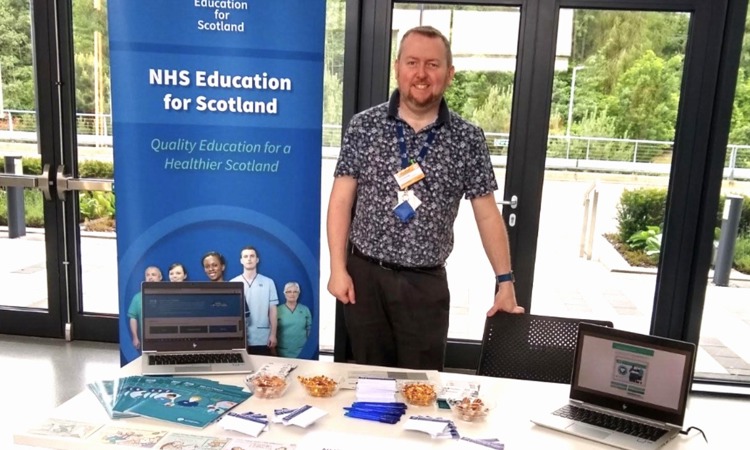
Curious about stepping up? Discover how Richard turned his frontline nursing experience into a rewarding practice educator role at PSD Scotland.

Read Richard's story
Search for practice educator jobs

Ready to take the next step? You'll find current vacancies across NHS Scotland. You can also set up alerts for new nursing and midwifery roles.

View vacancies