Graduate entry medicine
Already having a degree gives you 3 options for studying medicine in Scotland. You can choose between 2 dedicated graduate programmes or apply for the standard 5-year degree. Which option works best depends on what you studied, when you graduated, and whether you're already working in healthcare.
Coming to medicine from another degree or career
Many people choose medicine after another degree or career, including science graduates and nurses, pharmacists and paramedics. What you’ve done since school counts. Experience of work, responsibility and setbacks gives you lots to reflect on for writing your personal statement and preparing for interview.
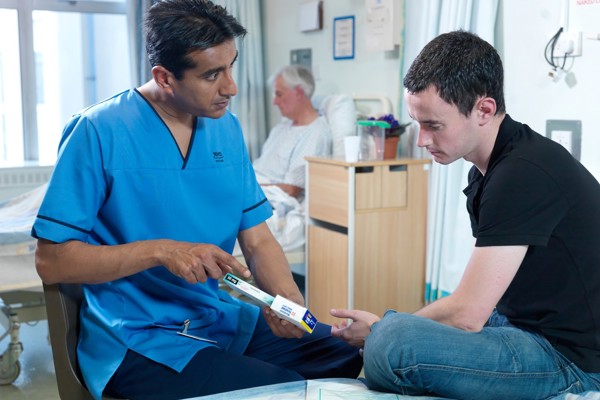
Check the table below to compare different programmes. It'll help you quickly spot the entry requirements and course lengths for each option, so you can see exactly what matches your needs.
| Compare by | ScotGEM | HCP-Med | Standard entry |
| Who it's for | Graduates in any subject | Registered healthcare professionals, clinical scientists and vets in Scotland | Anyone, including graduates |
| Length | 4 years | 5 years (part-time for the first 3) | 5 or 6 years |
| Degree needed | 2:1 in any discipline, studied within the last 3 years | 2:1 in a science or healthcare subject | Varies: some schools ask for a recent science degree |
| Admissions test | GAMSAT | UCAT | UCAT |
| How you apply | UCAS (A101) | Direct to Edinburgh | UCAS (A100) |
| Where | St Andrews and Dundee | Edinburgh | All 5 medical schools, including ScotCOM at St Andrews |
Requirements can change between admissions cycles. You'll always need to check directly with the medical school before applying.
ScotGEM
Scottish Graduate Entry Medicine (ScotGEM) is a 4-year degree run jointly by St Andrews and Dundee. It's designed around general practice and rural healthcare rather than large teaching hospitals. From your second year, you'll spend time living and studying out in rural Scotland.
Your degree can be in any subject, but you'll need a grade B in Higher Chemistry or Biology. You also need National 5 English and Maths, and to have studied at university within the last 3 years.
You can also apply for a £16,000 return of service bursary. This gives you extra funding in exchange for working in NHS Scotland after you qualify.
HCP-Med
Medicine for Healthcare Professionals (HCP-Med) is a 5-year degree at Edinburgh for people already working in healthcare in Scotland. For the first 3 years, you'll study part-time and mainly online so you can keep your job. You'll then join the main medical degree full-time for your last 2 years.
You'll need a 2:1 in a science or healthcare subject and registration with a healthcare regulatory body. You must also have been practising in the 2 years before the programme starts. If you're eligible, the Scottish Funding Council will cover your tuition fees.
Standard entry as a graduate
Don't discount the standard degree. All 5 Scottish medical schools consider graduate applicants, giving you the widest choice of where to study. For some people, it's a better fit.
Requirements differ by school, and some are much stricter about your degree subject than the graduate routes. For example, St Andrews, which offers the ScotCOM programme, asks graduate applicants for a 2:1 in a science honours degree from the last 3 years. Meanwhile, ScotGEM accepts any discipline.
The main trade-off is time and money. Standard entry takes a year or 2 longer, and tuition funding works differently for a second degree.
Do you need the UCAT or the GAMSAT?
You'll need the UCAT, unless you're applying to ScotGEM. ScotGEM is the only route in Scotland that uses the Graduate Medical School Admissions Test (GAMSAT). Every other route, including standard entry and HCP-Med, uses the UCAT.
If you're applying to ScotGEM and any other Scottish medical programme in the same cycle, you'll have to sit both tests.
Keep a close eye on the dates. GAMSAT registration for the September sitting closes at the end of June, nearly 4 months before the UCAS deadline. You'll need to work backwards from that summer deadline, not from October.
How many medicine programmes can you apply to?
You can choose up to 4 medicine programmes on your UCAS application. ScotGEM counts as one of them, so if you apply for it, you'll have 3 standard entry choices left. You're allowed to apply to ScotGEM and the standard degrees at St Andrews and Dundee in the same cycle.
HCP-Med works differently. Because you apply directly to the University of Edinburgh instead of through UCAS, it doesn't count towards your limit. If you're eligible, you can apply for HCP-Med and still use all 4 of your UCAS choices.
What if you don't meet the requirements yet?
Recency is the condition graduates most often fall short on. If you've been out of study for more than 3 years, taking on some recent academic work can bring you back into scope. This could be an Open University module or a postgraduate certificate, but you must check with the medical school first.
Don't forget that widening access support applies to graduates too, not just school leavers.
Pick your programme
Ready to look at the details? Choose a programme below to find out exactly what you'll need to apply.