Previous
Applying to medical school in Scotland
Every route into medicine in Scotland requires an admissions test that you'll sit the year before you start. There are 2 different tests, and the one you need depends on your chosen programme.
| Route | Test |
| Standard entry at any of the 5 Scottish medical schools |
UCAT |
| ScotCOM | UCAT |
| HCP-Med | UCAT |
| ScotGEM | GAMSAT |
You'll need to sit both tests if you're applying to ScotGEM and a standard medical programme in the same application year. Otherwise, you only need to take one of them. These tests don't cover school subjects, but instead assess your reasoning, judgement, and how you handle information under time pressure.
The testing window is now closed for 2027 medical school entry. The UKCAT Consortium will make 2028 entry dates available in March 2027.
The UCAT is used by all 5 Scottish medical schools. You sit it once per admissions year at a Pearson VUE test centre. The testing window runs between July and late September each year.
The UCAT has 4 separately timed subtests in a fixed order, taking just under 2 hours in total. There's no negative marking for incorrect answers. Abstract reasoning was removed from the test in 2025, so be careful using older preparation materials as they won't match the current format.
The 3 cognitive subtests are each scaled between 300 and 900, giving you a total score between 900 and 2700. Situational judgement is reported separately as a band from 1 to 4, with Band 1 being the highest. This band doesn't count towards your main score, but medical schools use it to separate candidates with similar cognitive results.
Booking your test is a 2-step process. You'll need to create a UCAT account first, then book a date once the booking window opens. You should book early, as September appointments are in high demand and local test centres fill up fast.
Find out more about booking your test.
The test fee is £70 in the UK. A bursary covers this fee in full if you're eligible. You must apply for the bursary before you book your test.
If you're disabled or have a long-term health condition, you can apply for extra time, rest breaks, or permission to bring medical items. The access arrangements deadline is earlier than the main booking deadline. You can't add arrangements to a booking you've already made, so apply for them first.
Some basic comfort aids don't need approval in advance. However, you must still tell the test centre about them at least 5 days before your test date.
You'll see your score before you leave the test centre. Your full score report is then available in your UCAT account about 24 hours later. Because you get your result before the UCAS deadline, you can use it to decide where you want to apply.
UCAT sends your score directly to the medical schools you list on your application. You don't need to send anything to them yourself.
How medical schools use your score varies, and it really matters. A score that gets you an interview at one university might not be enough for another.
Understanding this helps you focus on the medical schools where you'll have the best chance of success.
Compare the 5 Scottish medical schools.
The official UCAT resources are free and are the closest match to the real test. These include question tutorials, question banks, timed practice tests, and advice from previous candidates. It's a good idea to sit one practice test early to see where you stand, keeping the rest for your final weeks of study.
You don't need to pay for test preparation. Reach programmes and student-led outreach groups run free UCAT sessions across Scotland.
| What | When |
| Testing window | 13 July to 24 September 2026 |
| Access arrangements deadline | 10 September 2026 at 15:00 |
| Booking deadline | 16 September 2026 at 15:00 |
| Last day to site the test | 24 September 2026 |
| Bursary application deadline | Late September 2026 (confirm with UKCAT) |
There are no extensions to any of these UCAT deadlines.
Please note that the UKCAT Consortium will publish test dates for 2028 medical school entry in March 2027.
You only need the GAMSAT if you're applying to the ScotGEM programme. If you're a graduate applying to any other medical degree in Scotland, including HCP-Med, you'll need to sit the UCAT instead.
The GAMSAT has 3 parts that assess reasoning and written communication rather than memory recall. These are reasoning in humanities and social sciences, written communication, and reasoning in biological and physical sciences. You'll sit the written communication part by remote proctoring.
The other 2 parts are sat at a test centre. If you live more than a 3-hour drive from the nearest one, you might be able to sit the whole test remotely.
You're scored out of 100 for each part, alongside a weighted overall score out of 100. Results are valid for 2 years, meaning a result from an earlier sitting might still be usable.
UK medical schools use the September sitting of the GAMSAT, but registration closes at the end of June. This is nearly 4 months before the main UCAS deadline.
If you're considering ScotGEM, work backwards from the GAMSAT registration deadline instead of the UCAS one. Unlike the UCAT, there's no limit on how many times you can sit the GAMSAT, and you can defer a registration to a later sitting. The fee is around £296, with an extra charge if you register during the late window.
Registrations for September 2026 are closed and ACER is no longer accepting applications. The registration window for March 2027 will open in November 2026.
If you're disabled or have health-related or educational needs, you can apply for support. You should apply to ACER for reasonable adjustments as soon as you've registered for the test.
Visit the ACER website to find out more about submitting a request for reasonable adjustments for your GAMSAT.
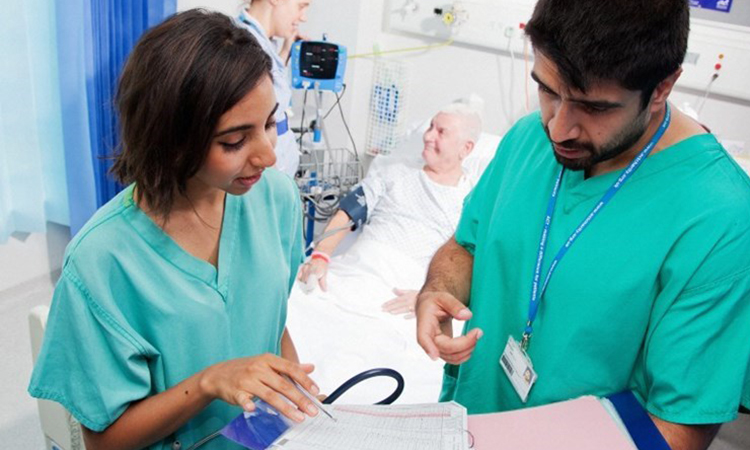
Find out how to showcase your skills and reflection in your UCAS personal statement.
Personal statement guide
Learn what care experience you need and how to reflect on it in your application.
Work experience guide