Standard entry medicine
Standard entry is the main route to studying medicine in Scotland. You’ll apply through UCAS for an undergraduate medical degree, and you’ll graduate with an MBChB. This is the qualification you’ll need to apply for provisional registration and a licence to practise with the GMC and start your postgraduate training.
What is an MBChB?
MBChB stands for Bachelor of Medicine, Bachelor of Surgery. The letters come from the Latin names Medicinae Baccalaureus and Baccalaureus Chirurgiae, because the 2 degrees are awarded together as one qualification.
Some UK universities call it an MBBS or BMBS instead. They’re equivalent qualifications, so the name on your degree won’t limit where you can train or work as a doctor.
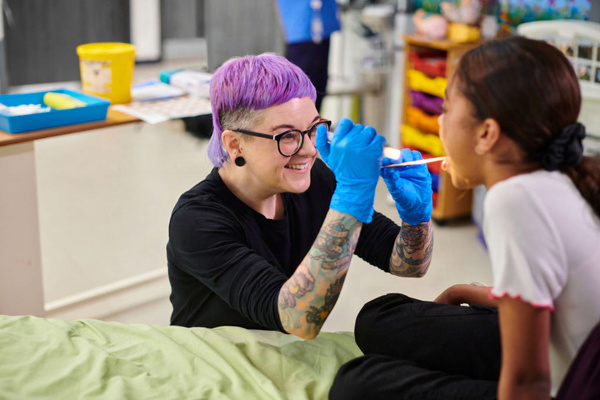
What you’ll need to apply for standard entry medicine
Most people apply in their final year at school, using the Highers achieved in S5. You don’t need to be a school leaver to apply, though. Standard entry is also an option if you’ve completed a preparation programme, or you’re returning to education as an adult learner or a graduate.
To apply for standard entry medicine, you'll need:
- Academic qualifications: Highers, with Chemistry and at least one other science subject. Each medical school sets its own entry requirements.
- Pass the University Clinical Aptitude Test (UCAT): You’ll sit the UCAT in the summer before you apply.
- A UCAS application: You must submit this by 15 October, the year before you intend to start your medical studies.
- An interview: Most Scottish medical schools will interview shortlisted candidates.
Read the entry requirements and important dates for all 5 Scottish medical schools.
Standard entry medicine: comparing Scottish medical schools
All medical schools in Scotland award the MBChB, but the programmes aren’t the same length or structure.
| Medical school | MBChB programme length | Programme structure |
| Aberdeen | 5 years | Integrated degree with clinical placements across the north of Scotland, including remote and island communities. |
| Dundee | 5 years | Integrated degree with early clinical contact and placements across NHS Tayside and NHS Fife. |
| Edinburgh | 6 years | Includes a compulsory intercalated BMedSci in year 3, so you’ll graduate with an honours research degree and your MBChB. |
| Glasgow | 5 years | Integrated degree with placements across the west of Scotland. |
| St Andrews | 5 to 6 years | St Andrews offers 2 programmes — ScotCOM (5 years) and a BSc option, where you’ll complete your MBChB or MBBS at a partner medical school (6 years). |
Whichever medical school you choose, your MBChB won’t tie you to one type of medicine. Every graduate starts with the same 2-year paid foundation programme, then chooses from more than 60 specialties in NHS Scotland, from general practice and psychiatry to surgery and public health.
What is an intercalated degree?
An intercalated degree is an extra year at medical school where you’ll study a subject related to medicine in depth. It’s a good route into academic medicine and research and results in a BMedSci or BSc in addition to your MBChB.
At the University of Edinburgh Medical School, it’s a mandatory part of the programme, so all students complete it. It’s optional if you’re studying medicine at Aberdeen, Dundee, and Glasgow.
If you’re a Scottish student, your intercalated year is funded by the Student Awards Agency Scotland (SAAS). It is managed through the “plus 1” arrangements, provided it is your first undergraduate degree.
Other routes to consider
Standard entry isn't the only way into medical school. The follow options may apply if you're a graduate or if your personal circumstances affected your grades.
If your grades are a barrier
Medical schools in Scotland offer adjusted entry requirements and preparation years if your circumstances have affected your grades. You might qualify if you’re:
- care experienced
- a young carer
- from an eligible postcode or school
If you already have a degree
Standard entry is open to graduates, and it’s worth considering along with the graduate entry routes. The best route for you will depend on your degree subject and whether you’re already working as a registered healthcare professional.
Specific standard entry programmes
Read our guides on 2 specific standard entry programmes. Click on the links below to get started.