Skip to main content Skip to footer

How to become a histocompatibility and immunogenetics clinical scientist

This guide explains the full career pathway to becoming a histocompatibility and Immunogenetics (H&I) clinical scientist in NHS Scotland. You’ll work at the forefront of transplantation science, using complex genetic and antibody testing to achieve the best possible match between donors and patients.

Salary

How much are clinical scientists paid? You'll receive a competitive salary that grows alongside your skills and experience. There are also clear pathways to step into senior roles as you progress.

Entry
Experienced

Entry

£41,608

As a trainee clinical scientist, you'll start on an annual salary of £41,608.

Experienced

£128,051

As a qualified clinical scientist, you can earn up to £59,159 each year. If you choose to progress your career in the NHS, you could earn up to £79,278 annually as a principal clinical scientist. Consultant clinical scientists are paid up to £128,051 per year before tax.

What is a histocompatibility and immunogenetics clinical scientist?

Histocompatibility and immunogenetics (H&I) clinical scientists are experts in human tissue typing and immunology. You’ll use advanced DNA and antibody testing to check if donated organs or stem cells are compatible with patients. It’s a career where high-level science directly saves lives.

As an H&I clinical scientist, you’ll:

  • support life-saving organ and bone marrow transplants
  • diagnose autoimmune diseases
  • investigate transfusion reactions

Your responsibilities cover the full spectrum of transplantation science:

  • HLA typing—Analysing a person’s DNA to identify their Human Leukocyte Antigen (HLA) type. This "genetic barcode" is crucial for matching donors and recipients to prevent rejection.
  • HLA antibody analysis—Testing regular samples from patients awaiting transplant to ensure that the risk of early rejection of a donor organ is reduced
  • Crossmatching—Perform final compatibility tests before a transplant takes place. This involves mixing the patient's serum with donor cells to check for harmful antibodies.
  • Clinical advice—Interpret complex immunological data to advise surgeons and transplant coordinators on the risks of rejection and the best donor options.
  • On-call support—Provide urgent advice and testing out-of-hours. When a deceased donor organ becomes available, you’ll work rapidly to identify a suitable recipient, often during the night or weekends.
  • Disease diagnosis—Test for specific genetic markers associated with diseases like coeliac disease, narcolepsy, or ankylosing spondylitis.

Education and training pathway

The first step to becoming an H&I clinical scientist is getting a place at university. To apply for a relevant undergraduate degree, useful school subjects include:

  • Chemistry
  • Biology
  • Maths
  • Physics
  • English
  • Scientific Technologies Foundation Apprenticeship

Speak to your guidance teacher or careers adviser about subjects offered at your school. You can also use the option choices tool on My World of Work.

Undergraduate degree programme

To become an H&I clinical scientist, you must first complete an undergraduate honours degree at SCQF level 10.

Relevant degrees include:

  • Biomedical Sciences
  • Biochemistry
  • Genetics
  • Molecular Biology

Find out which Scottish universities deliver these undergraduate degree programmes on My World of Work.

Widening access and alternative routes to higher education

Your background and circumstances should never be a barrier to a career in healthcare science. Colleges and universities in Scotland run specific programmes to support applicants from a range of backgrounds who show potential.

These access routes are designed to help you meet the entry requirements. They include:

  • Degree Link—A guaranteed progression pathway programme linking colleges across Scotland with Robert Gordon University (RGU). Each year, over 400 HNC and HND students gain advanced entry to undergraduate degree programmes at RGU. Learn more about Degree Link.
  • Focus West—A programme for senior pupils (S4 to S6) in specific west of Scotland schools. It helps those from lower-income or underrepresented backgrounds get a place at university. Learn more about Focus West.
  • Scottish Wider Access Programme (SWAP)—A route to higher education for adult learners who have few or no qualifications. These one-year college courses, such as SWAP Access to Life Sciences, provide a route to higher education at partner universities. Find out more about SWAP.

Contact the university admissions teams directly to find out which widening access programmes they recognise.

Get relevant experience and insight

Showing that you understand the reality of working in a transplant lab will strengthen your application. You can gain insight through:

  • Laboratory visits—Contacting the H&I laboratory at the Royal Infirmary of Edinburgh or Gartnavel General Hospital to ask about visit opportunities.
  • Volunteering—Supporting charities related to organ donation or transplantation to understand the patient experience.
  • Open days—Speaking to current scientists at university careers fairs or hospital open days.

Learn more about work placements and volunteering.

How long does it take to become a histocompatibility and immunogenetics  clinical scientist?

A relevant undergraduate honours degree takes 4 years, studying full-time. This is followed by pre-registration training which takes 3 to 4 years. The total time from starting university to qualifying as a clinical scientist is usually 7 to 8 years.

NHS Scotland Clinical Scientist Training Scheme

One of the routes you can take to become an H&I clinical scientist is an NHS Scotland Clinical Scientist Training Programme.

This is a 3-year, salaried pre-registration training programme, designed to give you the specific skills required for HCPC registration.

During the programme, you’ll:

  • complete rotations in specialist H&I laboratories in Edinburgh and Glasgow
  • undertake work-based learning and portfolio development
  • work towards completing the British Society for Histocompatibility and Immunogenetics (BSHI) Diploma

Training is supported by experienced consultant clinical scientists who will guide your development.

Equivalence route

If you’re an experienced scientist already working at a high level, you may be able to register as a clinical scientist via the equivalence route.

You’ll need to demonstrate that your training and experience meet the standards of one of the following:

  • Academy for Healthcare Science (AHCS)
  • Association of Clinical Scientists (ACS)

This involves a portfolio submission and a viva voce assessment.

Get to know the role

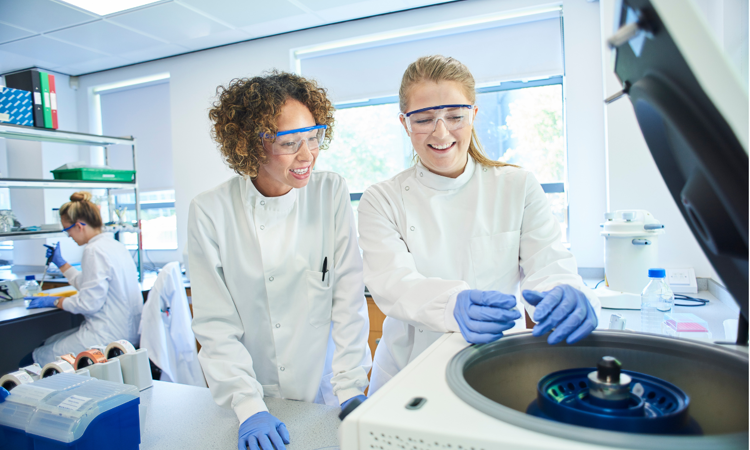
As an H&I clinical scientist, you’ll work in a high-pressure, high-reward environment. You’ll provide the critical scientific data that determines whether a transplant can go ahead, directly impacting patient survival and quality of life.

Your day-to-day tasks could include:

  • Carrying out high-resolution HLA typing for patients awaiting kidney, heart, or stem cell transplants.
  • Assessing the "match grade" between a donor and recipient and advising clinical teams on the risk of rejection.
  • Screening patients for HLA antibodies that could attack a transplanted organ.
  • Investigating transfusion reactions to identify immune causes.
  • Participating in tissue banking, including collecting and processing tissues for treatment.
  • Analysing complex genetic data and writing clinical reports.
  • Participating in an on-call rota to support urgent organ transplantation 24/7.

To succeed as an H&I clinical scientist, you’ll need a set of adaptive skills that help you navigate complex clinical decisions.

Self-management

  • Focusing—Maintaining absolute accuracy when analysing genetic sequences, as a single error could lead to a transplant mismatch.
  • Adapting—Switching focus rapidly when an urgent deceased donor offer comes in during a routine day.
  • Integrity—Adhering to strict standards for sample identification and data reporting to maintain patient safety.

Social intelligence

  • Communicating—Explaining complex immunological risks clearly to transplant surgeons and coordinators, especially during time-critical situations.
  • Collaborating—Working closely with haematologists, nephrologists, and laboratory staff to manage patient care.
  • Feeling—Understanding the anxiety patients feel while waiting for a transplant and treating every sample with urgency and respect.

Innovation

  • Curiosity—Keeping up to date with the rapidly evolving field of immunogenetics and transplant medicine.
  • Critical thinking— Working out difficult problems, such as why a patient is rejecting a transplant organ that looked like a good match.
  • Sense-making—Looking at the bigger picture when results are unclear to decide on the safest next step.

Find out more about meta-skills.

You will be part of a specialist multidisciplinary team, collaborating with:

  • consultant clinical scientists
  • haematologists and nephrologists
  • transplant coordinators
  • biomedical scientists
  • laboratory managers

H&I clinical scientists work in highly specialised laboratories that support the national transplantation service. In Scotland, these are based at:

  • Royal Infirmary of Edinburgh
  • Gartnavel General Hospital, Glasgow

Your career development

Qualification is just the start. You’ll continue to learn throughout your career to keep your skills up to date and maintain your HCPC registration.

Career progression

With experience, you can progress to senior roles such as principal clinical scientist or consultant clinical scientist. This allows you to:

  • lead research projects into new transplant testing methods
  • manage laboratory teams and service development
  • support national transplantation programmes
  • specialise in advanced molecular diagnostics

NHS Scotland supports continuous professional development (CPD) through in-house training, external courses, and professional body education and training.

Learn more about the HCPC’s guidance on CPD activities.

Professional bodies

These organisations regulate the profession, accredit training, and support your career development.
Published: 11/06/2026

Last updated: 11/06/2026

Part of: Explore careers

Topic: Healthcare science

The ultimate healthcare science career hack

The ultimate healthcare science career hack

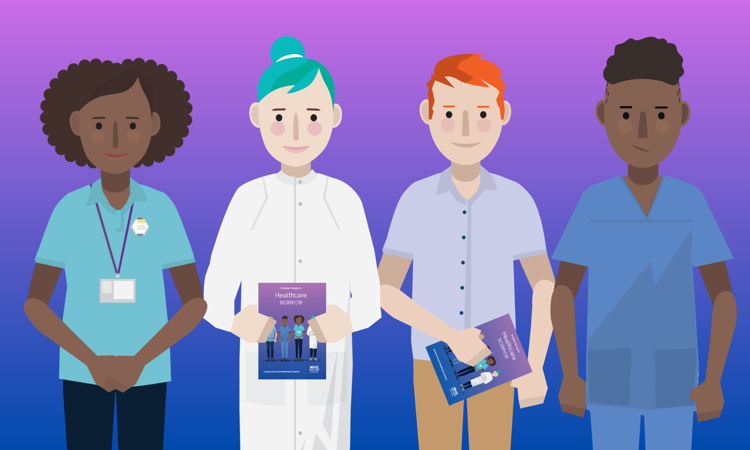
Deciding on the perfect role for you? Skip the research and get an "at a glance" guide to healthcare science roles in NHS Scotland. All the facts, none of the fluff.

Get the guide [PDF]
Find healthcare science training information

Visit the dedicated hub for healthcare science education in Scotland. Find the 'Rough Guide' for trainees, funding opportunities, and official recruitment updates.

Visit HCS training site