
Sara McArthur
04 August 2026
•2 min read

Your exam results aren’t the finish line
Opening your exam results envelope can feel like the biggest moment in your life. It isn’t. I promise. This is a #NoWrongPath story – starting with mine.
First in my family, against the odds
At school, I was obsessed by science and wanted to be a forensic scientist, just like the ones I saw on TV. I spent my free time watching murder mystery programmes and reading crime books. But I didn't know anything about healthcare science back then, let alone respiratory physiology!
I got the Highers I needed for university, but there was a catch - I was only 16. So, I stayed on at school for another year, then headed to the University of Strathclyde to study forensic and analytical chemistry.
I was the first person in my family to go to university. We’re from a lower socioeconomic area in Aberdeen, and at one point family was homeless for 9 months. Getting homework done and studying for exams without a stable place to live was hard.
About 2 years into my undergraduate degree, I realised it wasn’t for me. So, I left.
Dealing cards for a decade
After leaving university, I worked in an after-school club, then in various pubs and nightclubs. I eventually moved to Edinburgh, where I spent the next 10 years as a casino croupier.
I know this sounds like a huge detour, but it wasn’t. I learnt a lot about people from all of these jobs.
Reading people across a blackjack table taught me something I use every single day now. Anger is almost always fear in disguise. In the casino, that fear was about money. In hospital, it's fear of what a test result might mean. Once you understand that, you know how to respond to it.
A wedding, a baby on the way, and a science degree
While working as a croupier, I went back to studying, choosing biological science at the University of Edinburgh. Life didn't exactly slow down to let me finish one thing before starting the next. I also got married and sat my final degree exams 32 weeks pregnant with my first son!
Not long after, I saw an advert for a trainee respiratory physiologist. I had no idea what the job involved, but the mix of science and patient care pulled me in straight away.
Studying, working, and parenting - all at once
The training was intense. I had 2 days a week studying at the University of Sunderland and 3 days working in the hospital, for 4 years. My sons were only 2 and 3 when I started, so juggling childcare with a demanding training programme was one of the hardest things I've done.
It was worth it, though.
Working in a profession few people have heard of
I'm now head of services for respiratory physiology at NHS Lothian, covering the Royal Infirmary of Edinburgh, the Western General Hospital, and St John's Hospital in Livingston. I'm also a HCPC-registered clinical scientist.
My team helps diagnose lung conditions, monitor how diseases progress, and check how well treatments like medication and surgery are working. We also assess whether patients with complex heart conditions are fit for pregnancy. On top of that, I teach medical students, nurses and physiotherapists, and I still see patients myself.
Most people have no idea our profession exists. I didn't either, before I stumbled into it. That's exactly why I keep showing up to talk about it. It's exactly the kind of healthcare science career you won't hear about at a careers fair.
What skills do you need for a career in respiratory physiology?
It’s not all just science, as communication is everything. You need to build trust fast with patients who might be scared, vulnerable or upset. Plus, you'll be working alongside other healthcare professionals, patient families and wider clinical teams.
Beyond that, you need a genuinely curious mind. Research in this field moves quickly, so you're never really “done” learning. New evidence and new techniques show up all the time, and the best people on our team are the ones who stay hungry for it. I even went back and did a postgraduate certificate in clinical education, just to get better at the teaching side of my job.
Why your exam results are just the start
If your exam results didn't go the way you hoped today, please don’t panic. The honest truth is that your results are a snapshot, not the whole picture.
You have your whole life to explore different roles, change your mind, and completely reinvent your career, sometimes more than once. It's completely fine to feel gutted or angry right now. Give yourself that. Then take time to think, because what feels like a setback today can turn out to be the best thing that ever happened to you.
Do you need a degree to get into a healthcare science career?
No, and that's the whole point. There's no single route into a healthcare science career. Our team in respiratory sciences includes people with degrees in exercise physiology, pharmacology and biomedical science, plus colleagues with no degree at all. Some joined straight from school, some from university, and some switched over from completely different hospital roles.
Every one of them bring something unique and they’re all brilliant with patients. There genuinely is no single route in.
Get involved and explore your options: it could change everything
Early in my career, I joined the workforce committee of the Association for Respiratory Technology and Physiology (ARTP), our professional body. It opened up my network across the UK and reignited my enthusiasm for this profession. If you ever get the chance to get involved with something like that, take it. It could shape your whole career.
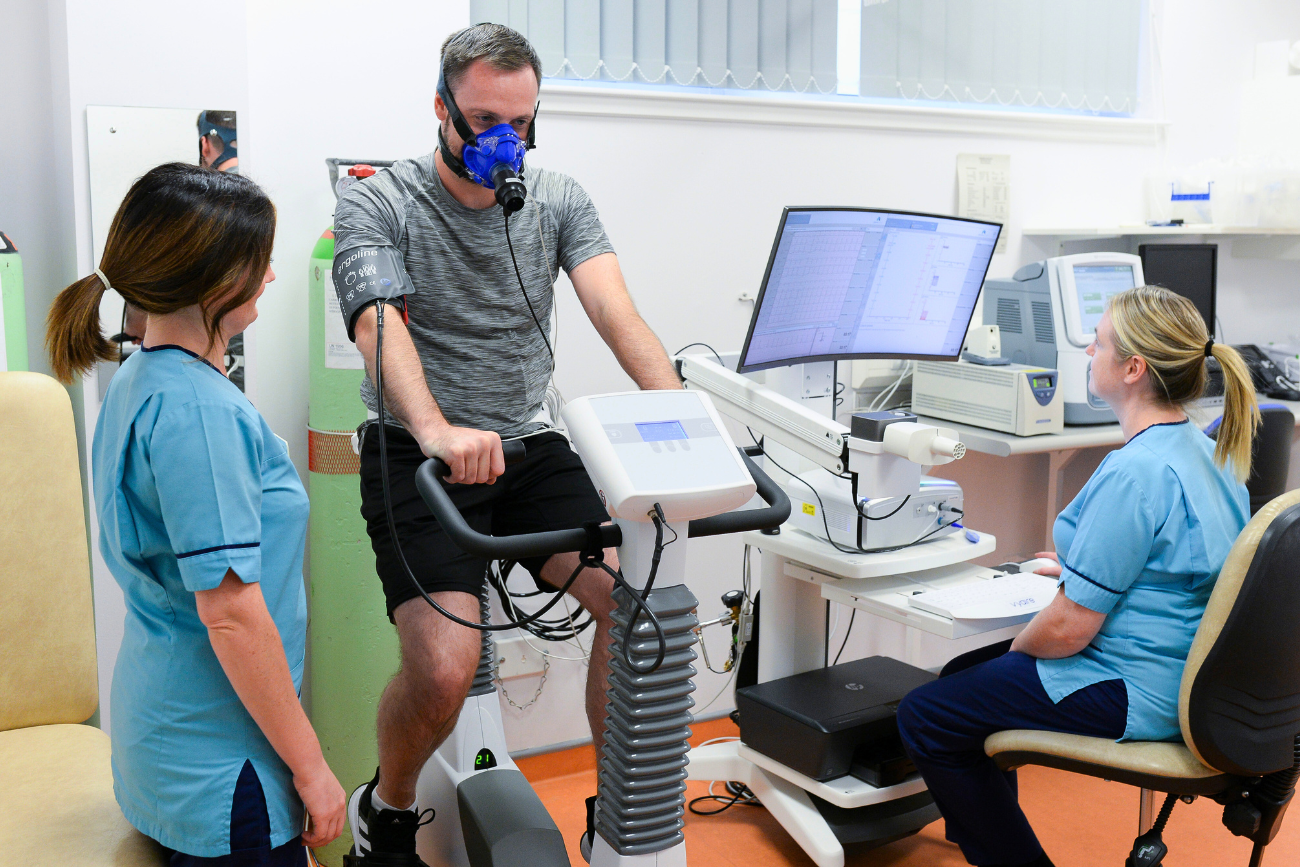
There’s no wrong path to a healthcare science career
Your exam results are just one small step in your story, so don't let them hold you back from exploring your options. There is genuinely lots of different routes you could take to a career that lets you use science to make a real, human impact. Discover the different healthcare science pathways we offer and remember there's #NoWrongPath to success.
Curious about what your healthcare science career pathway could look like? Explore our healthcare science careers today!