
Caren Bowyer
30 March 2026
•2 min read
From the lab to healthcare support
Changing careers is a significant life event, especially when balancing family commitments. For me, the transition involved moving from a scientific laboratory to a community-based healthcare role.
Before joining the NHS 11 years ago, I worked as a food microbiologist. I’ve held an interest in biology and completed various courses with the Open University. However, my motivation to shift into healthcare was deeply personal.
My brother has learning disabilities and speech and language difficulties. I grew up advocating for him and helping with his communication. This gave me a passion for the work, even without a professional background in healthcare.
Overcoming the fear of the unknown
Like many career changers, I hesitated to apply at first because I felt out of my depth. I lacked the specific work experience listed in the job description. I hadn't used a computer at work for many years and was unfamiliar with modern software. I also worried about juggling a new role with raising 3 young children.
However, a conversation with Fiona, a lead speech and language therapist, changed my perspective. Fiona assured me that the NHS supported parents with flexible working hours. She encouraged me to focus on my transferable skills rather than my employment history.
Looking back, submitting that application was the best career decision I ever made. My confidence grew quickly, and 11 years later, I’m in a job I love and have absolutely no regrets.
What does a speech and language therapy assistant practitioner do?
There is a common misconception that speech and language therapy is only about teaching people to speak or providing rehabilitation.
In the adult learning disabilities team, the focus is much broader. My role is to create a "total communication environment". This involves identifying a person’s potential and adapting their surroundings to help them interact meaningfully. It’s about ensuring communication happens in both directions
The role also covers physical health. Many people are surprised to learn that SLT teams support eating and drinking. As I often explain, this is because speaking and swallowing use the same physiology.
A typical week in the adult learning disabilities team
It might surprise you to know that my work requires a mix of creativity, technical skill, and empathy. Each day is different, and I could be doing any of these activities:
- Researching specific topics—This helps me to understand religious practices around eating and drinking, or what happens during a specific medical procedure.
- Creating visual supports—I design resources to help clients cope with challenges like hospital appointments, staff changes, or bereavement. These might be social stories, visual schedules, or picture books. These tools reduce fear and confusion, often so that important medical procedures go ahead successfully.
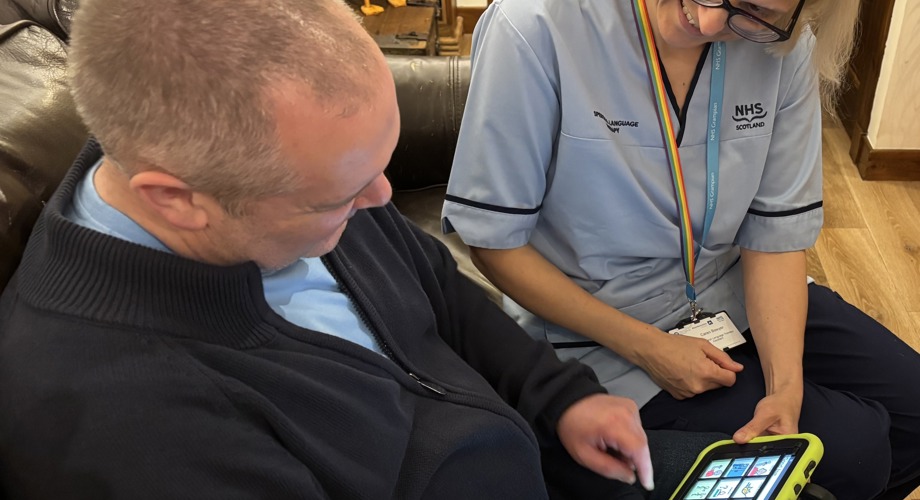
- Mastering technology—I have to learn how to use complex communication software or liaise with developers to troubleshoot issues with a client's device.
- Developing communication resources—I create materials to help people express their opinions, feelings, and stories. This ranges from low-tech choice boards to assisting therapists with high-tech "talkers" and apps.
- Makaton signing—I help clients learn new signs. I also teach family members and support staff the signs a client already uses to improve two-way communication.
- Dysphagia support—I work alongside therapists with eating and drinking assessments by collecting information, completing questionnaires, and observing mealtimes.
I also work in a multidisciplinary team alongside physiotherapists, occupational therapists, nurses, and social workers. A key part of my role is producing "easy read" resources to help colleagues communicate treatment information effectively.
The impact of personalised care
For me, the most rewarding part of the job is making a difference to a person's quality of life. I take pride in getting to know my clients well, including their hobbies and interests.
Why I love what I do
I feel happiest when I am creating something I know a client will like. After 11 years in the team, I have got to know many of our clients very well. I know their preferences, hobbies, and special interests.
I love making resources bespoke for a person. I often incorporate specific themes—like Disney, Wonder Woman, or James Bond—to match their aesthetic. This encourages them to engage with the tool and enjoy using it.
Seeing that excitement when they receive something personalised is delightful.
Measuring success
Success is often measured in moments of independence. I recall the pride I felt hearing that a client used a new communication aid to order a coffee or a beer for the first time.
Hearing back that somebody has used their new communication aid successfully... to express an opinion that has taken everybody by surprise is always exciting and heart-warming.
Career progression and development
NHS Scotland offers clear pathways for staff development. My team meets monthly for continuing professional development sessions, covering topics like Makaton and new technologies.
I am currently completing a dysphagia module designed for healthcare support workers. This training allows me to support speech and language therapists more effectively with eating and drinking assessments by collecting information and observing mealtimes.
My commitment to learning has been recognised. Starting the module meant I met the criteria for a promotion to my current role. I was also nominated for an NHS Grampian Star award, showing that my contribution is valued by my team.
Looking to the future, I hope to see new Graduate Apprenticeships in Scotland. These would allow SLT support workers like me to study to become qualified practitioners while working.
My advice for career changers
I believe that speech and language therapy support work is a creative and rewarding career.
My advice is to look beyond specific job titles and consider your transferable skills. If I could go back in time, I would have explored this career path much earlier.
The best career decision I made was to submit my application for this job, despite feeling unsure if I was qualified... My confidence continued to grow, and I am still here 11 years on with no regrets and I’m very happy.
Where could your skills take you?
If you are inspired by my story and want to explore a career that combines healthcare, creativity, and technology, visit our recruitment website to search for current vacancies.