
Azul Zorzoli
02 November 2026
•3 min read

What does a clinical scientist in microbiology do?
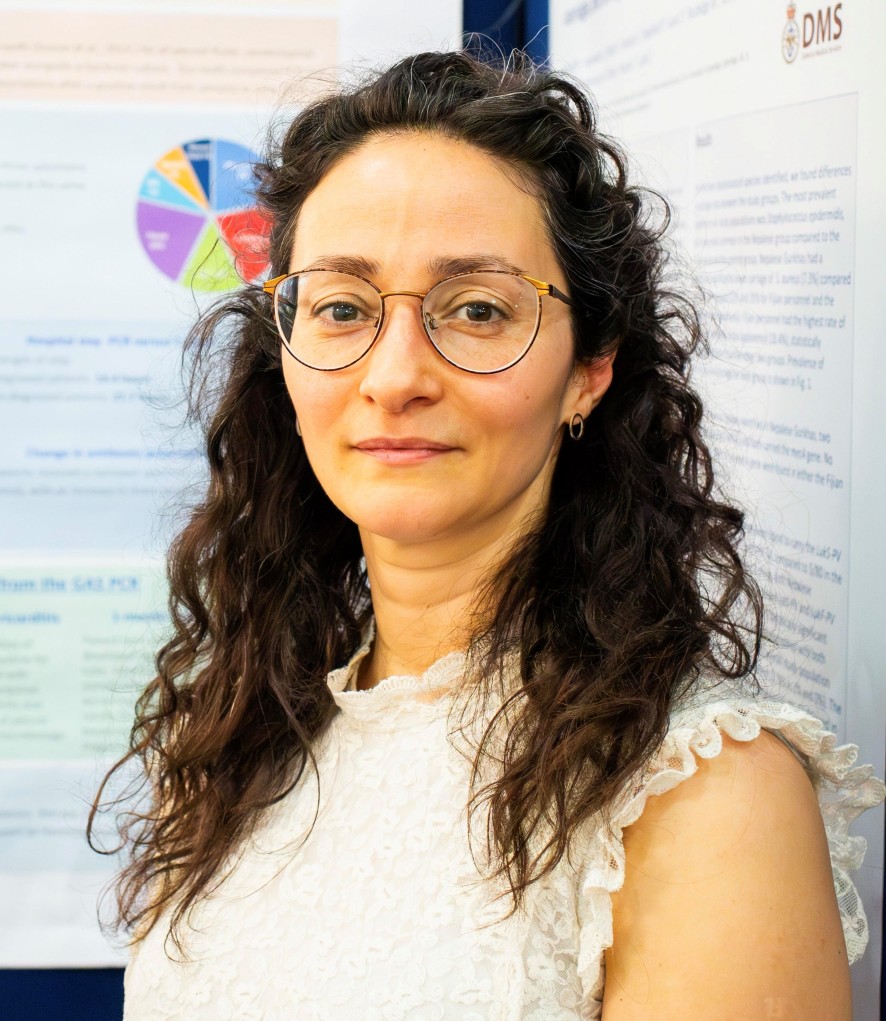
My name is Azul and I'm a clinical scientist in microbiology. Clinical scientists work in NHS laboratories, often out of the public eye, providing specialist expertise that helps diagnose and treat patients.
There are lots of different types of clinical scientist, from genetics and histopathology to audiology and medical engineering. Others, like me, work in infection sciences. I specialise in virology: the viruses that make people ill, and the tests that tell us which one it is.
How I became a clinical scientist
I owe my start to Argentina's free public education system, which allowed me to train as a biomedical scientist in biochemistry. I then worked for many years as a laboratory technician at a National Research Council microbiology institute, learning microbiology, animal models and flow cytometry.
A Fulbright scholarship took me to the United States for an MSc in Microbiology and Immunology. I later came to Scotland for a PhD in Molecular Microbiology at the University of Dundee.
During my PhD, I became interested in how clinical microbiology contributes to patient care. With the support of my supervisor and a consultant microbiologist at Ninewells Hospital, I spent time in the hospital laboratories.
Training posts are limited and competitive, and luck played a part when I secured a trainee position in Edinburgh in 2020. I qualified as a clinical scientist in 2024 and now specialise in clinical virology, a field I find both intellectually stimulating and deeply rewarding.
What's clinical scientist training like?
Moving from research into diagnostic work took some adjustment. I was used to the independence and curiosity-led pace of academia, and suddenly I was the "new" person in a junior role again. It was humbling, and probably good for me.
I had to learn how the NHS is structured, how to balance the priorities of different teams, and how to meet the strict quality standards laboratories are assessed against. I'm grateful to the colleagues who continue to guide me, and for a pathway that let me build on my research background.
Rotations, visits to sequencing services and shadowing specialist teams let me follow a sample from arrival to result, and understand how results contribute to patient care.
Training also taught me to think critically, to learn from things that didn't go to plan (there were a few), and to reflect on how my decisions affect patient safety. Learning to communicate results to clinicians, and knowing when to raise a concern, has shaped how I work.
What can you gain from clinical scientist training?
What I valued most was the variety. Alongside daily laboratory learning, I got involved in research, attended conferences, presented talks and posters, and completed university study in healthcare data science and programming. I also sat the first part of the Royal College of Pathologists' exams, a key milestone in specialist training.
The chance to specialise was just as important. Building depth in one discipline, while being supported to look across the wider service, sharpened my clinical judgement. For example, knowing when an unexpected result needs confirming before it's reported.
It also prepared me for independent practice, including reviewing results and signing off assay verifications. Perhaps most valuable was meeting trainees and senior scientists from across the UK. It showed me this is a community as well as a career.
Trainee clinical scientists are still a rare species in the NHS, and I believe we benefit from a strong collective voice. That's why I engage regularly with fellow trainees and with national and international professional bodies representing laboratory medicine.
Is a career as a clinical scientist right for you?
The programme suits people who enjoy asking questions, interpreting evidence and understanding the science behind complex findings. It's a long journey, so I'd suggest approaching it with curiosity and patience (yes, I'm still working on it).
You'll spend much of your training working alongside colleagues with far more experience. That can feel daunting, but it's also one of the programme's greatest gifts.
People skills matter far more than anyone admits. Years of scientific training teach you to interpret results, but you also need to navigate the wonderfully unpredictable world of human behaviour. Clear communication and good working relationships are just as important to high-quality patient care.
My advice is to:
- explore different areas of the service
- stay engaged with research and teaching
- build connections with fellow trainees
Above all, never lose sight of the patient behind every sample.
Training with a young family
I started my training 8 months pregnant, so my first rotation came with an unusually firm deadline. Juggling laboratory placements, travel, exams and then a small child was one of the hardest things I've done, and I won't pretend it was easy. I'm grateful to the people who made it possible, at work and at home.
If you're balancing training with family life, you're not the exception. Ask early about flexibility and support, and be kind to yourself. It can be done, though not without the occasional bit of chaos.
Could you work in microbiology?
This National Pathology Week, we're celebrating the laboratory teams who help diagnose and treat patients across Scotland every day. If you'd like to do what Azul does, find out which degrees you'll need and how to apply for trainee clinical scientist roles in NHS Scotland.